
 kp_admin
Once again, it’s time for the MoodleMoot DACH, the event around Moodle, an open-source software that many universities and companies are using as their main e-learning tool. The MoodleMoots are events that are happening all over the world, always organised by the country where they take place. The MoodleMoot DACH is similar to the worldwide phenomenon, however differs in some very significant parts. This year’s MoodleMoot DACH is happening in Zurich, Switzerland, at the ETH Zurich, and is mainly organised by the team of Antonia Bonaccorso and her team.

MoodleMoot vs. MoodleMoot DACH
Let’s talk a little bit about the main differences between a MoodleMoot and our MoodleMoot DACH.
Language: English vs. German
The main reason why we started organising MoodleMoot DACH events was that back then, there was a huge German-speaking community that had an urge to have a MoodleMoot in German. We heard, we listened, and we adapted. This was the moment the MoodleMoot DACH events were born. At the beginning, not even an official MoodleMoot, but in spirit definitely, our main goal has always been to allow the German-speaking community to meet, network, and exchange knowledge.
Although the DevCamp, which mainly focuses on developers, has always been in English, even the BarCamp seems to have merged into a multilingual event over the past few years.
Conference vs. Unconference
When I started to think about how we could make the whole setup of a MoodleMoot better and more intriguing for the participants, especially for developers, who IMO have been a bit underrated until then, the first thing that came to mind was an unconference. So basically the total opposite of what a usual MoodleMoot represented and looked like.
But for me this setup made way more sense for this target group, especially when we wanted to focus more on the technical people and developers. So that was the moment the format of a 4-day event, split into a DevCamp and a BarCamp, was born.
DevCamp
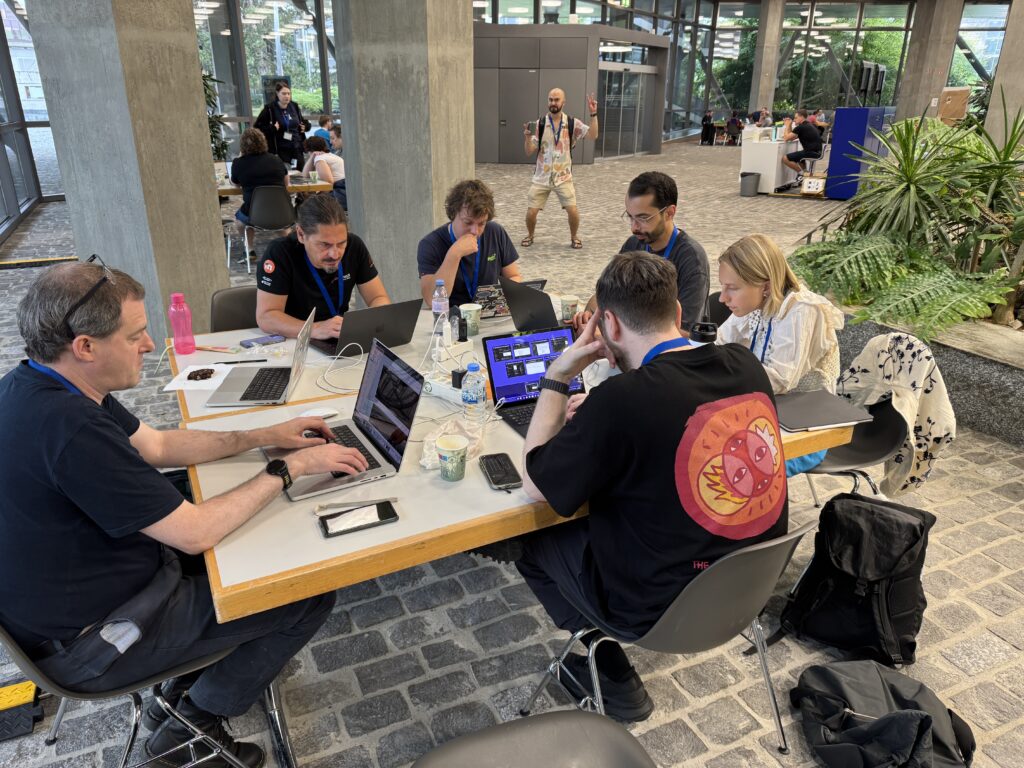
I think that we might still be the only ones who have this format at a MoodleMoot. The main goal of a DevCamp is to produce working code and create some kind of finished product by the end of the second day. You might think that this is impossible, but the last few years have proven the opposite. It is incredible what people can achieve when you give them the time and space, and also the opportunity to shine.
“It’s an intensive two-day hackathon which allows Moodle developers to work with like-minded people on hands-on projects while having the opportunity to exchange know-how, validate their ideas and create working code.”
BarCamp
One of the things that I learned from attending several MoodleMoots before starting to organise them was that I didn’t like the conference approach. Call for papers, strict schedule, and a conference fee were all things that didn’t agree with my vision of a more technical and developer-focused event.
That is the reason why I decided to use the unconference format, aka BarCamp, for the first official MoodleMoot DACH in 2019 (and also the ones before). And I am very happy that in 2026, we are still sticking with this format.
Paid vs. Free for the participants
One important aspect for me has always been the accessibility of the MoodleMoot DACH. And what I mean by that is the fact that everyone can join them. Not only people who are being sent there by their company, but also those who are lucky enough to get the allowance to go from their university. But also Moodlers who are maybe freelancing or need to maybe even take holidays in order to join. Making the event free of charge is one thing that makes it stand out from many other MoodleMoots around the globe, and I hope that we will change this.
MoodleMoot DACH 2026
Now that I have explained a lot about how the MoodleMoot DACH differs from all the other MoodleMoots worldwide, let’s talk about the one in 2026 in Zurich, which I just returned home from.
Orga Team
I don’t want to bore you with all the organisational stuff too much. Let’s just say that behind every single MoodleMoot DACH there is the on-site team, which changes every single year. We are basically rotating between Germany (D), Austria (A), and Switzerland (CH), hence DACH. But behind every on-site team, there is a whole orga team that supports the on-site orga team behind the scenes and from far away.
Every on-site team that agrees on organising the upcoming 4-day long MoodleMoot DACH, commits to follow some ground rules, which have to be followed, but has otherwise free hand to adapt and change things according to their availability and resources.
The simplest example is the worth of money. We, as organizers, contribute a specific budget in order to make the MoodleMoot DACH happen. The only thing is that this budget is not worth the same in the three countries. Therefore, it is the responsibility of the hosting country to decide what it will “deliver” with the resources it has available. And I can promise you that every single host always does their best to squeeze the most out of the available budget.
This year’s team around Antonia B. managed to create once again not only a great atmosphere, but also keep us all fueled with coffee and snacks. But they also managed to put a lot of effort into all the things outside of the “schedule” to keep us busy even after the official end of each MoodleMoot DACH day.
Moodle HQ Mentors
Back in the days, we started inviting Moodle HQ developers to join us for the DevCamps. In the beginning, it was David Mudrak and Petr Skoda, who not only helped us during the DevCamp but also were willing to facilitate a developer workshop before the event itself.
I am excited that since 2024, we have been trying to get back to this tradition to invite Moodle HQ people to join us as mentors during the DevCamp. They might not realise it, but having someone from HQ be present and also willing to help and support our developers during the DevCamp is something absolutely valuable and priceless.
This year’s Moodle HQ mentors have been:
- Ilya
- Dani
- Hugo
- Júlia
- Laurent
- Travis
- Rosa

Every single one of them contributed a different superpower and individual knowledge in supporting our teams with their projects.
Idea Pitches vs. Working Projects vs. Finished Products
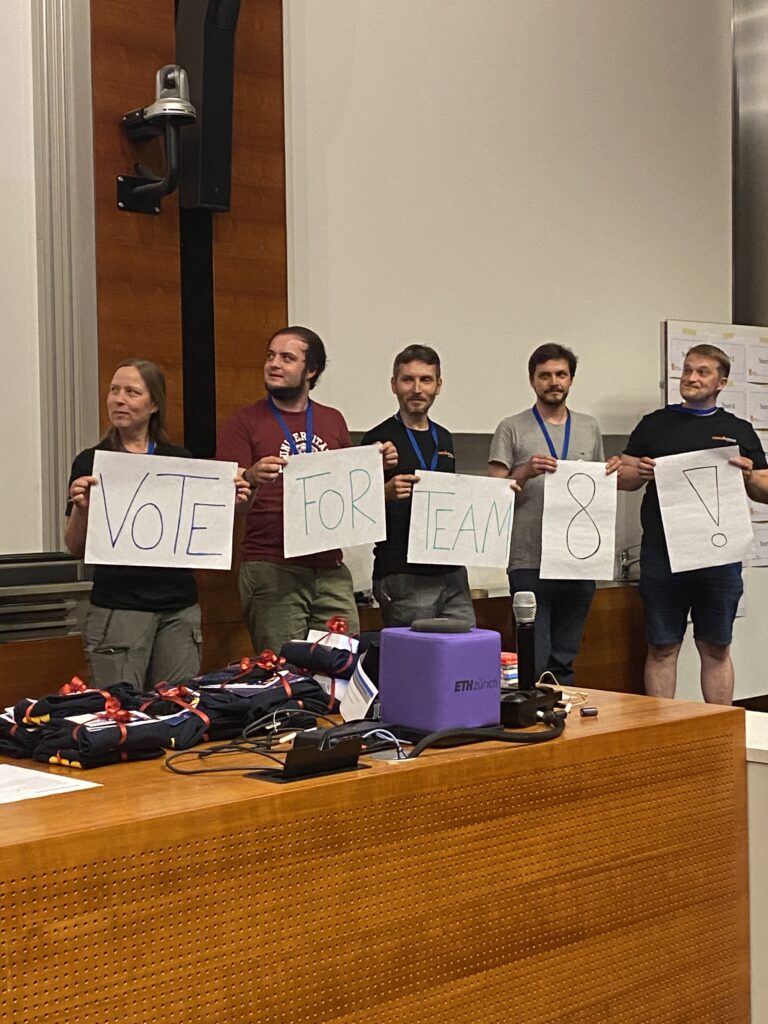
The first part of the DevCamp, after I am done with the intro, is the idea pitching part. This basically means that whoever wants to, comes on stage and pitches their idea within 1 min. This year, we had a total of 35 ideas that were pitched by attendees. Out of those 35 pitches, teams have been working on 22 projects. And out of those 22 projects, all of them had working code at the end of day 2.
I especially loved the work the teams put into their projects, but also the humor and attitude they brought on stage.
Some quotes just stayed with me and made my day:
“Is it 3 min? Oh shit.”
“In order to win, you need to have confetti”
“Vote for team …”
“So we said, let’s take it to the devcamp and fix it – and we did | We do have working code”
The Moot DACH 2026 in a nutshell
In numbers, the MoodleMoot DACH 2026 in Zurich could be summed up as follows:
DevCamp
- 149 registered participants
- 120 attendees
- 35 idea pitches
- 22 projects
- 3 winners
- gazillion coffees
- and a hell of a time
Barcamp
- 278 registered participants
- ??? attendees
- 50 sessions + 1 special session
- millions of coffees
- and tons of great talks
In experiences we could sum up the 4 days:
- amazing chats
- great projects
- a lot of setpping out of the comfort zone
- mindblowing pitches
- interesting sessions
- controversional ideas
- great evening events
- a lot of laughter
- long nights
- early mornings
- a lot of hellos
- unfortunately some good byes
- tons of see you next year
See you next year in Vienna, Austria.